
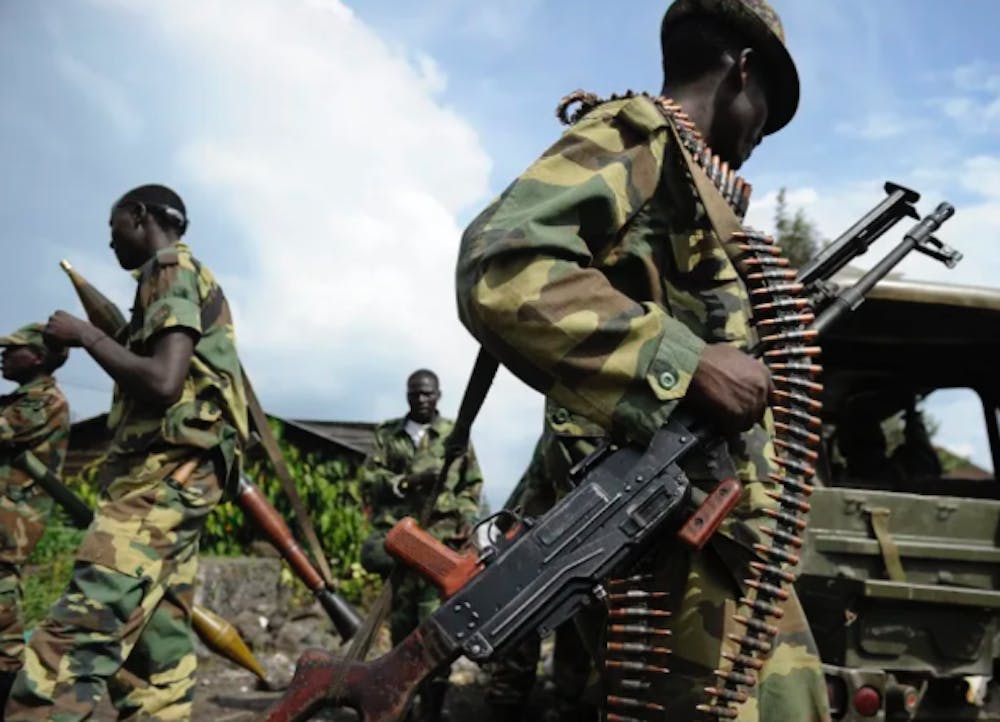
Wars, famine, genocide. We see it all the time—on the news, Tiktok, or Instagram. Stories of little children getting killed or starved to death in the hands of corruption. When thinking about it, two nations often come to mind: Ukraine and Gaza. On the other hand, African countries are often put on the back burner, being mentioned often using general terms such as “genocides in Africa” without reporting specific countries or information.
This isn’t a surprise. Studies show that it takes 40% more deaths in African countries than those in the Pacific to receive news coverage, pointing to a lack of overall attention on African crises. Yet despite this, Africa is experiencing the most armed conflict; the continent accounts for the current plurality of wars occurring across the world. This leads us to ask an important question: what is actually happening in Africa, and why is it so unspoken about in Western media?
Currently, one of the largest ongoing wars in Africa is the civil war in Sudan. Conflict between the Sudanese Army and the RSF (Rapid Support Forces) began after the ousting of the old president Omar al-Bashir. This created a power vacuum, leading to both generals (Burhan and Hemedti) vying for control. As a result of corrupt practices taken by both sides, there have been hundreds of thousands of deaths in Sudan alone, with over 12 million people being displaced. Famine has spread with many residents trapped and food supplies being blocked, leading to 24 million Sundanese people facing food insecurity. Widespread sexual assault and violence has occured at the hands of those in power as well. Despite being the largest humanian crisis in the world, it is not talked about enough in the media, with 75% of Americans admitting they didn’t understand what the conflict in Sudan was.
Another large conflict occurring in Africa is the crisis in the Democratic Republic of Congo. The attack is being run by M23 rebels, an armed group that was formed in 2012. In 2021, the group began taking control of territories in the east of Congo, creating its own administration and levying taxes on its people. The group, which is being supported by Rwanda’s armed forces, has taken control of Goma, a crucial trading hub in Congo. Attacks within the region have been devastating, with 8.2 million people being displaced last September, including more than 700,000 internally displaced people living in camps around the provincial capital. This has led to a spread of disease, food insecurity, violence, and a lack of basic resources such as water and electricity. Because of this, it is estimated that 1,000 people die a day in the region. Despite this, it is reported that on an average Western media site, a singular car bombing in Iraq receives more coverage than thousands of deaths in Congo.
This is just the beginning of the list of countries where there are neglected African emergencies. Other examples include Ethiopia, Cameroon, and Mozambique. So the real question is: why does Western media so often cover up or ignore humanitarian crises in African countries? One of these reasons is likely that geographic distance disconnects Western audiences from the crises themselves. There is also a lack of national and political interest in these countries since they aren’t what a lot of Americans consider “core nations” like China or Russia.
Racism also undoubtedly plays a factor. Black on Black violence has been shown to have less of an appeal to Western viewers than when there is a “Caucasian angle.” For example, current crises in African nations are less reported than those in 2000, when white farmers were being forced to flee from their land in Zimbabwe. This illustrates more of an interest in danger towards white people than Black communities, which is reflected in the underlying racism that persists in the media.
Even when there is coverage of crises in Africa, it is portrayed in a biased lens that misrepresents key events and twists reality. Often there are images posted of poverty, war, and famine that lack depth and context. These depictions don't inform readers of the specific areas where these crises are taking place, leading to little change. Additionally, these oversimplified portrayals of Africa as a continent rampant with corruption, poverty, and war, diminishes the nation to a harmful stereotype.
By understanding the power the media plays in our perception of countries and events that occur across the world, it becomes clear that the American perspective has been altered by misrepresentation of Africa. It is only through accurate portrayals that provide diverse insight into what is going on in the world will we ever truly be informed and enlightened.
Read More
Education on the Line: The Ripple Effects of School Closures
By Leila Golzari-Hunt | Mar. 27As school closures loom, a growing wave of concern is building over the future of the city’s classrooms and the students caught in the middle. With many facilities already stretched to their limits, families are left questioning if these shifts will trade quality education for a system pushed far beyond its breaking point.

Book Bans Persist in U.S. Schools
By Wendy Li | Feb. 14Thousands of books exploring identity and race are disappearing from American schools as ban rates reach record highs. Explore how this ongoing shift forces a critical look on student learning and intellectual freedom.

A Student’s Mini Guide To Managing Stress
By Rosedanny Jeanpierre | Feb. 11Want to avoid letting the grind of midterms and academic expectations dictate your mental state? Trade the panic for a personalized toolkit of relaxation hacks and strategic habits designed to keep you centered and productive.