
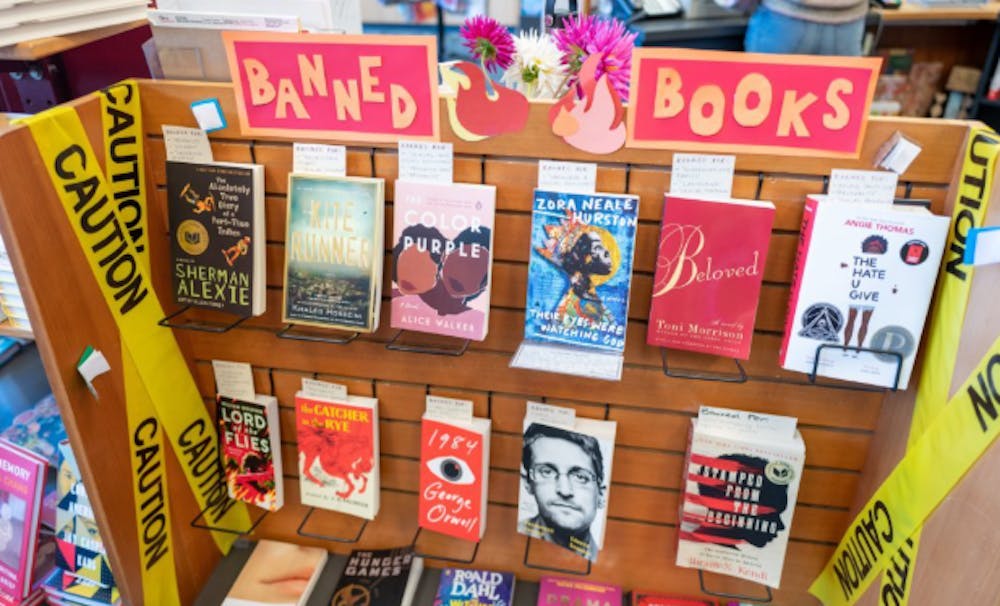
Book bans across the United States remained widespread in 2025, with thousands of titles removed or restricted in public schools and libraries. The majority of these bans target books that address race, sexuality, and LGBTQIA+ identities, resuming a trend that has been intensifying since 2021. As 2026 begins, the growing number of book bans has prompted national discussion about student’s access to controversial issues, diverse perspectives, and intellectual freedom.
Educators and free-expression organizations note that reading plays a central role in how students encounter different viewpoints, historical experiences, and social issues. As a result, the removal or restriction of books has drawn attention to how schools balance community concerns with access to varied and challenging material.
Since 2021, more than 15,000 book bans have been recorded nationwide, affecting thousands of unique titles across school districts. During the 2024-2025 school year alone, numerous districts reported challenges that resulted in removals or restricted access to books in school libraries and classrooms. The ALA’s Office for Intellectual Freedom similarly documented a high volume of challenges, noting that schools remain the primary targets of book bans at state and national level.
Data collected by both organizations show that books most frequently challenged tend to address topics related to race, racism, LGBTQ+ identities, gender, and sexuality. Titles exploring historical injustice, identity, or coming-of-age experiences are disproportionately represented in ban reports. Many of these books are written by authors of color or feature LGBTQ+ advocates.
Several high-profile titles were banned in 12 or more school districts during the 2024-2025 school year. These include The Bluest Eye by Toni Morrison, Gender Queer: A Memoir by Maia Kobabe, The Handmaid’s Tale by Margaret Atwood, The Kite Runner by Khaled Hosseini, and The Hate U Give by Angie Thomas. Multiple books by Sarah J. Maas also appeared repeatedly on district ban lists, indicating that both classic and contemporary literary works continue to face the challenges of restriction and removal.
Many of these book challenges originate from organized pressure groups that submit formal reconsideration requests at the district level. These efforts often result in temporary removals while books undergo reviews. Educators and librarians have reported that such removals can limit access to instructional materials and reduce the range of perspectives available to students, which are widely considered valuable academic resources.
As the 2026 school year continues, national organizations are keeping track of new challenges and policy developments related to book access, which might be differing in states across the nation. Monitoring efforts must continue as debates over curriculum content and intellectual freedom remain active across the country.
Read More
Education on the Line: The Ripple Effects of School Closures
By Leila Golzari-Hunt | Mar. 27As school closures loom, a growing wave of concern is building over the future of the city’s classrooms and the students caught in the middle. With many facilities already stretched to their limits, families are left questioning if these shifts will trade quality education for a system pushed far beyond its breaking point.

Invisible Conflicts: Western Media’s Marginalization of African Humanitarian Crises
By Leila Golzari-Hunt | Feb. 12Learn about several humanitarian crises in Africa that the world is ignoring.

A Student’s Mini Guide To Managing Stress
By Rosedanny Jeanpierre | Feb. 11Want to avoid letting the grind of midterms and academic expectations dictate your mental state? Trade the panic for a personalized toolkit of relaxation hacks and strategic habits designed to keep you centered and productive.