
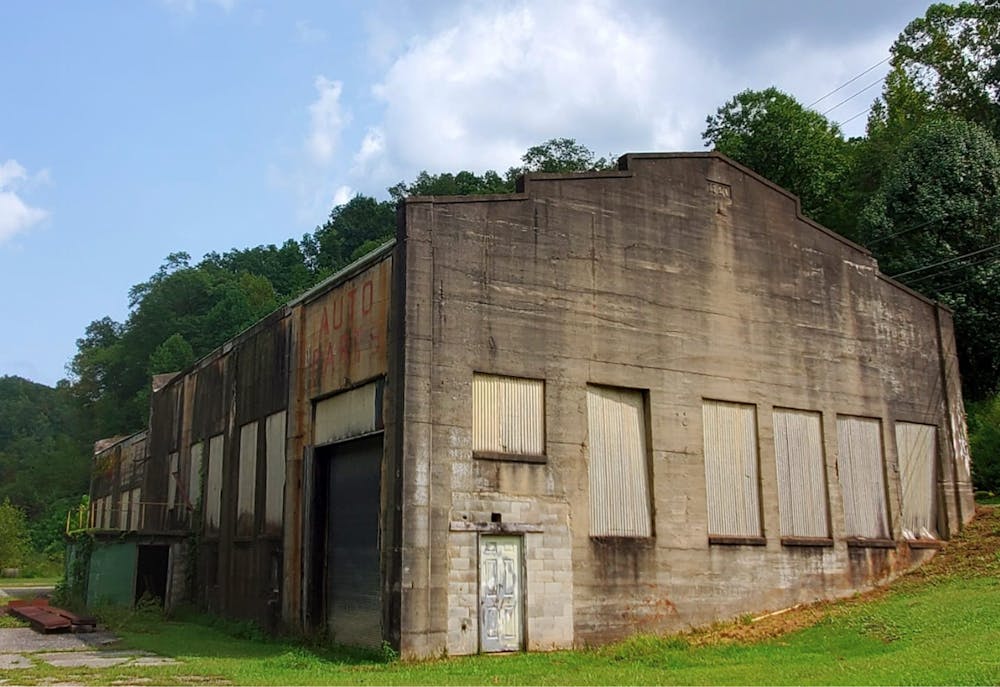
Walk down almost any street in America and you’ll find them: dull and darkened storefronts and homes that somehow seem as if they have always been abandoned. With an aura to them that almost feels frozen in time, It’s hard to imagine that these run-down husks ever contained any bustling life within their walls.
But that’s exactly what makes abandoned properties so unique. Within our modern world, most businesses occupy their storefront in a rigid manner. Fast food restaurants are designed to be fast food restaurants. They have become interchangeable when one inevitably replaces another, simply putting up a new logo and hiring new staff will cover all traces of the old business.
This one-size-fits all approach has crushed character out of our lives that used to care for more than the palatable minimum. Colorful and characterized McDonald’s interiors have disappeared in exchange for bleak gray walls, floors, and siding. This love of the mundane has ironically caused the abandoned buildings of our towns and cities to possess more character than any corporate ones ever did.
An abandoned building can be a blank canvas for our imaginations. There is one home in my neighborhood that had been abandoned for several years. I vividly remember walking the sidewalk in front of it and seeing a tree that had sprouted from the chimney. The way the building felt set back in the unmaintained yard and removed from its highly populated surroundings was almost mysterious. Even though it housed nothing, its presence had a way greater effect on me than I can say about any other occupied home. When it got demolished and replaced by a generic modern home, the imaginative feel of the tree-chimney house was gone.
Part of the fascination is that abandoned properties are one of the few places where time is allowed to move slowly. Everything else in our world is optimized, renovated, flipped, or updated: restaurants remodel every few years; apartment complexes repaint themselves before anyone notices the colors fading; stores rearrange their aisles on purpose to produce greater flow. It’s all about corralling humans to their next generation in a frictionless way. But abandoned edifices don’t participate in that; there is no profit to be made in gazing at buildings. They weather. They decay. They keep secrets.
There’s also something unintentionally democratic about these spaces. A boarded-up storefront belongs to everyone and no one. Anyone walking by can project a new purpose onto it. A bakery. A thrift shop. A place for poetry readings. A tiny grocery store. A memory of what used to be, or a fantasy of what could soon replace it someday. Before a developer arrives with blueprints, the building exists in a suspended state where every resident casually invents an alternative potential use for it.
But that suspended state rarely lasts. Eventually the blueprints do arrive, and with them comes the same pattern that has swept across towns everywhere: the erasure of anything boldly stylized in favor of whatever is easiest to rent and replicate and sell. Developers will claim they’re “revitalizing” a neighborhood, but revitalization has become little more than a euphemism for sanding down every rough edge until nothing original remains. Most modern developments have been led by the same mentality that would disguise commercial parking lots with fake grass and call them “plazas.” Worse still is that most buildings could just as easily exist in Phoenix or Portland or Pittsburgh.
What strikes me is that the supposedly “modern” replacements never seem to match the emotional impact of what they replace. No one has ever stopped in front of a brand-new beige duplex and wondered, even for a moment, what stories sit behind its drywall. No one walks past a freshly built chain storefront and imagines it becoming anything other than what it already is. Modern development leaves no room for mystery or memory. It doesn’t want you to linger, just to stay long enough to spend some money, because if you do look too closely there’s practically nothing to find.
Of course, no one is arguing that abandoned homes and storefronts should simply be left to rot forever. There is a real need for housing and commercial areas that are functional. But the problem is that we’ve convinced ourselves that functionality and character are mutually exclusive. We’ve accepted the idea that the only viable replacement for something old is something generic. That’s a failure of imagination, not economics. Communities deserve better than prefab repetition masquerading as improvement.
Read More

The Importance of Empathy in the Current Era
By Leila Golzari-Hunt | Feb. 19When political labels are weaponized to justify violence and strip victims of their dignity, we trade our shared humanity for partisan warfare. Reclaiming empathy is no longer just a moral choice—it is a desperate necessity to stop a culture that has become dangerously desensitized.

Black Girls Deserve Vulnerability—SZA Said it First
By Qitanah Pettiway | Feb. 13In a world that demands Black girls be strong and silent, SZA’s album, Ctrl, feels like a quiet rebellion. Explore how the popstar’s embrace of vulnerability carves out space for a new generation of Black women to exist freely, honestly, and on their own terms.

Forget Resolutions: Here’s How You Can Start 2026 Right
By Natalie Spina | Feb. 9Stop chasing a performative "New Year reset" that is practically designed to fail. Real transformation begins by trading loud, unrealistic resolutions for the quiet, sustainable habits that actually survive past January.