
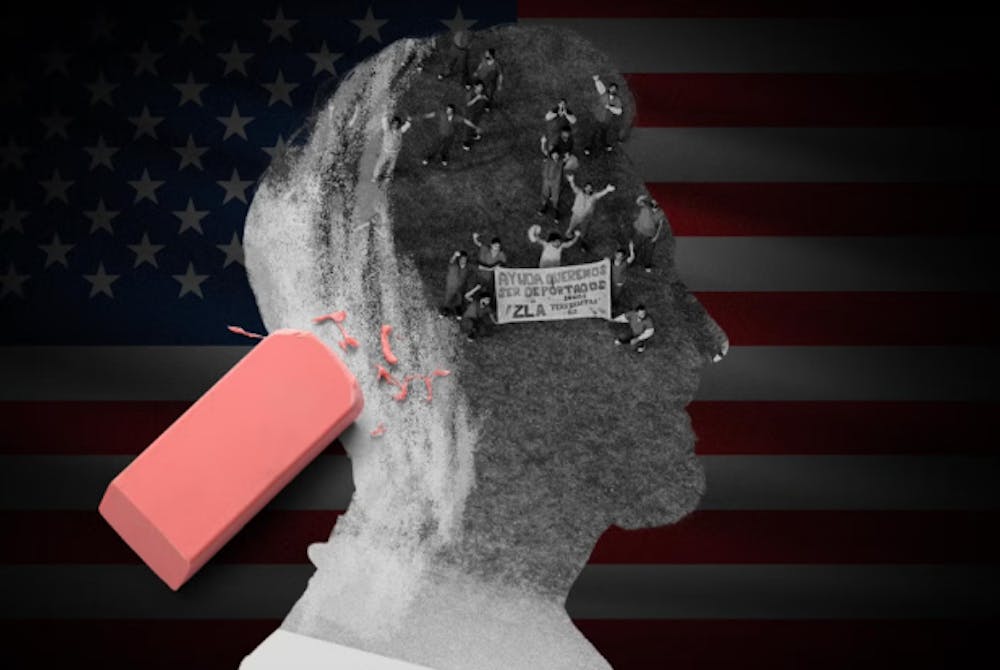
Recent news in the United States has been plagued with internal conflict: families separated, government attacks on protestors, and the death of Renee Good at the hands of an ICE officer. These headlines are all connected by a common theme: violence. Yet, reactions to these events are often very polarized, with Republicans and Democrats fighting over the justification of these actions. The political views of victims are being used to justify acts of harm. This political opposition has led to the American people being desensitized to violence; it has transformed into a political issue, and not a moral one.
A key event to look at when discussing this topic is the murder of Renee Good. On January 7, Good was shot and killed at point-blank range by an ICE officer who claims it was an act of defense. This claim has created controversy, with many people who watched video countering
that no ICE officer was injured and Renee Gold was simply leaving the tense scene in her car.
This sparked public reaction. In general, many people expressed heartbreak and their condolences to Good’s family. However, this wasn’t the only reaction. Kristi Noem called out Good for inciting “domestic terrorism” while Vice President Vance added she was a “deranged leftist” and it was “a tragedy of her own making.” Quickly, Republicans rushed to support these claims, while Democrats pointed out the cruelty of the statement.
The real danger lies in framing this death as a political one. When we create narratives that seek not to address the death of a human life, but to instead use politics as a way to blame the victim, we moralize death and murder. Political views aside, a woman was shot and killed. Her children lost a mother, and her partner lost a life-long companion. By using language that frames a killing of a human being at the hands of a federal officer as justified, her life loses its value in the public eye, and the victim is stripped of her humanity.
Another current example is the police response to peaceful protests in support of Gaza occurring in colleges across the country. Students engaged in sit-ins as a way to protest the issue. In response, they were arrested, tackled, injured, and pepper sprayed. Rather than addressing the issue of the government using force to silence free speech, these protestors were automatically labeled as “extremists” with Trump calling them “Hamas sympathizers.” Again, we see the justification of the abuse of power being used through the use of political language. Instead of accounting for the health and wellness of students, their political stance is used to justify harm made against them.
As Americans, we are losing our empathy. When we see these problems as solely a “Democrat” or “Republican” issue instead of an act of violence, we are normalizing them. We are justifying the harms of others at the benefit of our political stance. This has become a troubling pattern, perpetuated by those in power and spread throughout the media. If we began to normalize murder and the harms of human beings, our morals collapse. We lose our sense of humanity and the bond that connects all of us. We are not simply defined by our political identity. We are humans who carry value, deserve dignity, and have the capacity to hold benevolence towards each other. The choice is in American hands: choose empathy or lose our humanity.
Read More

Black Girls Deserve Vulnerability—SZA Said it First
By Qitanah Pettiway | Feb. 13In a world that demands Black girls be strong and silent, SZA’s album, Ctrl, feels like a quiet rebellion. Explore how the popstar’s embrace of vulnerability carves out space for a new generation of Black women to exist freely, honestly, and on their own terms.
Forget Resolutions: Here’s How You Can Start 2026 Right
By Natalie Spina | Feb. 9Stop chasing a performative "New Year reset" that is practically designed to fail. Real transformation begins by trading loud, unrealistic resolutions for the quiet, sustainable habits that actually survive past January.

The Strong Black Woman Phenomenon, and Why it's Harmful
By Rosedanny Jeanpierre | Feb. 2Unpacking what the “Strong Black Woman” stereotype is, and examining how this phenomenon reduces women to only their strength, and harms the Black community as a whole.