
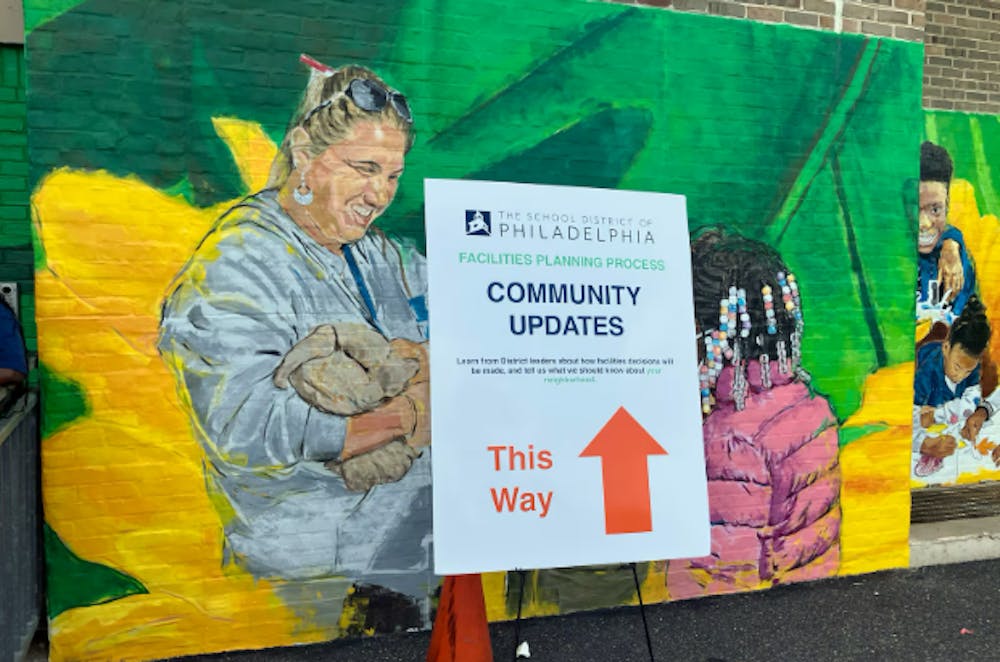
The School District of Philadelphia has recently initiated the Facilities Master Plan, which contains the proposal to close 20 schools within the district. This has been met with widespread protest and backlash. More than 100 students, educators, and advocates protested the night before the Philadelphia Board of Education meeting about the recent proposal. A lot of community members are demanding answers: why the need for sudden closures? Why these specific schools? And what will happen to the thousands of students who attend these schools?
The Superintendent of the School District of Philadelphia, Tony Watlington, has said these closures are necessary for “[using] our resources in a more efficient manner to drive more high-quality academic programming.” The plan is for students from closed schools to be reassigned to other campuses. We’ll see these changes take effect in the 2027-2028 school year. The key factors in determining the schools for closure are building conditions and enrollment trends. 12 of the 20 schools are set to be repurposed for district use, and eight will be transferred to the city for job creation or redevelopment into affordable housing. Watlington has highlighted six desired outcomes of the plan: to support communities and student achievement, maximize the use of our school buildings, increase access to Pre-Kindergarten, provide more rigorous academic offerings (like Algebra and AP courses), higher quality arts, music and physical education, and to enhance CTE opportunities. Watlington has pledged the district would create a designated transitions team to help families with any transportation, social, or emotional needs.
However, some parents are arguing that this proposal will be extremely harmful for several reasons. First, there is the issue of a lack of transparency. Families have been speaking up at school board meetings expressing the absence of community consultation in this decision, saying they feel “left in the dark.” They are demanding for the district to engage with Philadelphians in order to guide this process.
Additionally, there is a concern about overcrowding. With the closure of schools, students will be placed into already full classrooms, especially in North Philadelphia, which is home to several schools operating beyond their intended capacity. Crowded schools cause issues in accessibility, as resources are stretched too thin among students. This inevitably leads to lower quality education for a larger body of children. In 2013, a similar event occurred where the Philadelphia School District closed more than 10 percent of its public school buildings. Studies suggest that students attending schools receiving the displaced students were impacted greatly: the more students a school received, the more achievement declined. On the other hand, there was an improvement in test scores for displaced students who ended up at higher-achieving schools. But still, there were negative effects on the absences and receiving suspensions of displaced students as a whole. Not to mention, the district’s financial problems persisted even after the chaotic closures.
Another issue being brought up into conversation is that this plan is disproportionately impacting disadvantaged students and minorities. 15 out of the 20 schools scheduled to close serve a majority Black, minority, or low income populations. Melanie Silvia, who is a parent of a student in a crowded school in Northeast Philadelphia, said she feels as though the immigrant population in the Northeast is being forgotten.
One example of a school set to close is Lankenau Environmental Science Magnet High School. Those involved in Lankenau have been very involved in recent protests, with dozens of students and teachers attending them. It is planned for Lankenau to be closed and students to be enrolled instead in Roxborough High School. Lankenau students point out that there are unique CTEs, or career and technical education, programs and opportunities only accessible at Lankenau. This directly goes against one of the district’s goals to enhance CTE opportunities. Their school is near the Schuylkill Center for Environmental Education and has access to nearby farms, land to hike, and animals who inhabit the campus. These opportunities help students have hands-on learning in the environmental science sector and learn useful life skills. Lankenau families argue that these same opportunities would not be available at Roxborough.
District officials say that the proposal is not final and still requires approval from the School Board. Parents and community members will have the space to provide feedback before final decisions are made. This decision is not a light one. It will have far-reaching impacts outside of just determining which schools remain open. It will change the lives of families and reshape the future of education for all those in the School District of Philadelphia.
Read More

Book Bans Persist in U.S. Schools
By Wendy Li | Feb. 14Thousands of books exploring identity and race are disappearing from American schools as ban rates reach record highs. Explore how this ongoing shift forces a critical look on student learning and intellectual freedom.

Invisible Conflicts: Western Media’s Marginalization of African Humanitarian Crises
By Leila Golzari-Hunt | Feb. 12Learn about several humanitarian crises in Africa that the world is ignoring.

A Student’s Mini Guide To Managing Stress
By Rosedanny Jeanpierre | Feb. 11Want to avoid letting the grind of midterms and academic expectations dictate your mental state? Trade the panic for a personalized toolkit of relaxation hacks and strategic habits designed to keep you centered and productive.